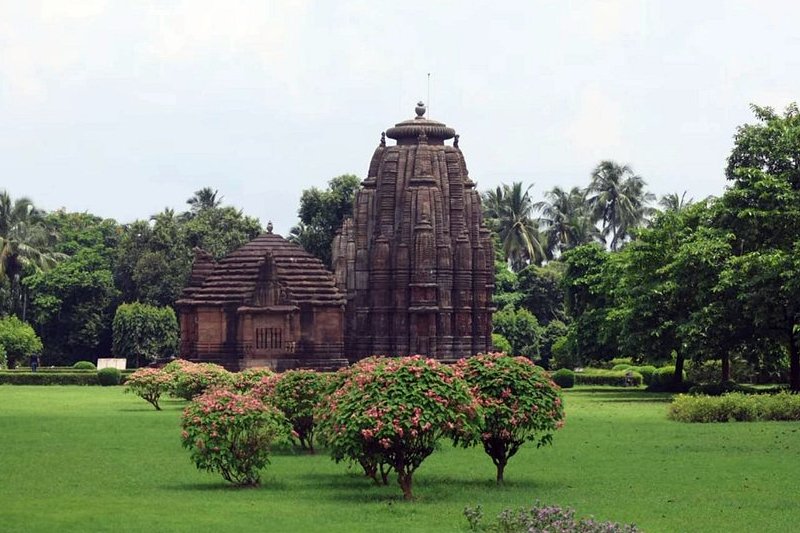
Rajarani Temple is an 11th-century temple monument in Bhubaneswar, Odisha, renowned for its distinctive Kalinga-style architecture, richly carved sandstone surfaces and unusual absence of a presiding deity. The temple was built using red-and-yellow Rajarania sandstone, from which its present name is derived. Odisha Tourism describes it as a major example of Odisha temple architecture and associates its original identity with the Indresvara Temple and Shaivism.
About Rajarani Temple
Rajarani Temple stands in the historic temple landscape of Bhubaneswar and represents the architectural development of the later Somavamsi period in the 11th century. Its exterior is particularly notable for detailed sculptural work depicting deities, guardians, women and couples.
Unlike many active Hindu temples, Rajarani Temple does not have a presiding deity today. Architectural features, including the representation of Lakulisa and other Shaiva elements, have led historians to associate the monument with Lord Shiva.
The temple is maintained by the Archaeological Survey of India and is recognized as an important monument of Odisha's architectural heritage.
Why Is Rajarani Temple Known?
Rajarani Temple is particularly known for three features: its Rajarania sandstone construction, its sophisticated Kalinga-style architecture and its extensive stone carvings.
The name Rajarani comes from the red-and-yellow sandstone traditionally known as Rajarania. The stone develops an amber appearance over time, adding to the visual character of the monument.
The temple is also popularly associated with the expression "Love Temple" because of its sculptural representations of women and couples. These carvings form an important part of the monument's artistic identity.
History of Rajarani Temple
Rajarani Temple dates to the 11th century and was constructed during the later stages of the Somavamsi rule. Historians have associated the temple with the earlier name Indresvara and with Shaivism, although the monument no longer contains a presiding deity.
The name Rajarani is associated with the sandstone used for the temple rather than with a king or queen. The building has undergone conservation and restoration over time and is now maintained by the Archaeological Survey of India.
The temple's architectural details provide important evidence of the development of Odisha's temple-building tradition during the medieval period.
Architecture of Rajarani Temple
Rajarani Temple is an important example of Kalinga temple architecture. Its composition includes a sanctum tower and a jagamohana, or entrance hall, arranged according to the characteristic architectural principles of the period.
Curvilinear Shikhara
One of the most striking features is the tall curvilinear tower over the sanctum. The main tower rises in a beehive-like form and is surrounded by smaller miniature towers, creating a distinctive clustered appearance. Odisha Tourism highlights this tower as one of the temple's defining architectural features.
Jagamohana
The jagamohana forms the entrance hall of the temple. Its comparatively restrained decoration creates a contrast with the richly carved exterior of the sanctum structure. Odisha Tourism notes that the entrance hall is notably less ornamented than the sanctum.
Sculptural Carvings
The exterior walls contain detailed carvings of deities, female figures, couples and other decorative elements. Sculptures of directional guardians, or dikpalas, form another important feature of the monument.
The entrance area also contains representations associated with Shaivism, including Lakulisa and Shaiva guardian figures.
Things to See at Rajarani Temple
Visitors interested in architecture and history can focus on several features while exploring the monument:
-
The tall curvilinear shikhara over the sanctum
-
Miniature towers surrounding the main tower
-
Intricate sandstone carvings
-
Sculptures of women and couples
-
Guardian figures and directional deities
-
Shaiva imagery around the entrance
-
The contrast between the ornate sanctum exterior and the comparatively plain jagamohana
The monument is especially suited to visitors interested in Odisha's medieval temple architecture, sculpture and heritage.
Things to Do at Rajarani Temple
Explore the Temple Architecture
The principal activity is architectural and heritage exploration. Visitors can observe the proportions of the temple, its tower structure and the detailed carvings across the exterior.
Study the Stone Sculptures
The carved figures provide an opportunity to examine the artistic traditions of medieval Odisha. Photography can also be useful for visitors studying architectural details, subject to applicable site rules.
Attend the Rajarani Music Festival
Rajarani Temple is the setting for the annual Rajarani Music Festival organized by Odisha Tourism. The festival features Indian classical music and has included Hindustani, Odissi and Carnatic traditions. Odisha Tourism currently describes the festival as being held in February.
Because festival dates can change from year to year, visitors should check the current official announcement before planning a visit around the event.
How to Reach Rajarani Temple
By Road
Rajarani Temple is located in Bhubaneswar and can be reached by local road transport. Odisha Tourism states that regular city bus services are available, while private autos and cabs can also be used to reach the temple.
By Train
The nearest railway station identified by Odisha Tourism is Bhubaneswar Railway Station.
By Air
The nearest airport is Biju Patnaik International Airport in Bhubaneswar.
Best Time to Visit
The supplied destination information identifies October to January as a preferred visiting period. Visitors interested in the Rajarani Music Festival should check the festival's current schedule separately because the event is associated with February in the current Odisha Tourism information.
Visitor Information
Rajarani Temple is a protected heritage monument managed by the Archaeological Survey of India. The destination is located in the Rajarani Colony area along Tankapani Road in Bhubaneswar.
Facilities
Parking is available. Bhubaneswar itself provides broader visitor infrastructure, including hotels, banks and ATMs.
Nearby Places to Visit
Rajarani Temple can be combined with other historic temples in Bhubaneswar. Relevant nearby attractions include:
-
Mukteswar Temple
-
Parasurameswar Temple
-
Lingaraj Temple
-
Brahmeswar Temple
-
Ananta Basudeva Temple
Mukteswar Temple, Parasurameswar Temple and Ananta Basudeva Temple among destinations associated with a visit to Rajarani Temple.
Mukteswar Temple
Mukteswar Temple is another important example of Odisha temple architecture and is frequently included with Rajarani Temple in Bhubaneswar heritage itineraries.
Parasurameswar Temple
Parasurameswar Temple is another historic temple in Bhubaneswar and forms part of the city's important group of heritage temples.
Lingaraj Temple
Lingaraj Temple is one of Bhubaneswar's principal historic temples and is commonly included in temple-focused sightseeing itineraries with Rajarani Temple.
Travel Tips
-
Check current monument timings before visiting.
-
Verify the current admission fee before travelling because published information varies.
-
Allow time to examine the exterior carvings rather than viewing the monument only from a distance.
-
Follow applicable Archaeological Survey of India rules at the monument.
-
Check official announcements if planning a visit around the Rajarani Music Festival.
-
When combining several Bhubaneswar temples, check the individual visitor arrangements for each monument.
Frequently Asked Questions
Where is Rajarani Temple located?
Rajarani Temple is located in Bhubaneswar, Odisha, in the Rajarani Colony area along Tankapani Road.
What is Rajarani Temple famous for?
Rajarani Temple is famous for its 11th-century Kalinga-style architecture, Rajarania sandstone construction, sculptural carvings and distinctive curvilinear temple tower.
Which deity is worshipped at Rajarani Temple?
There is no presiding deity in the temple today. Architectural evidence has led historians to associate the monument with Lord Shiva and the earlier name Indresvara.
Why is it called Rajarani Temple?
The temple is named after the red-and-yellow Rajarania sandstone used in its construction.
Is Rajarani Temple an active temple?
The monument does not have a presiding deity today and is maintained as a protected heritage monument by the Archaeological Survey of India.
How can visitors reach Rajarani Temple?
Visitors can reach the temple by road using city buses, autos or cabs. Bhubaneswar Railway Station and Biju Patnaik International Airport are the nearest major railway and air connections identified by Odisha Tourism.