-
Quick Information
-
Temple Name: Shree Jagannath Temple
-
Location: Bada Danda (Grand Road), Puri, Odisha
-
District: Puri
-
State: Odisha
-
PIN Code: 752001
-
Type: Active Hindu Temple and protected monument
-
Religious Significance: One of Hinduism's four Char Dham pilgrimage destinations
-
Main Deities: Lord Jagannath, Lord Balabhadra, Devi Subhadra and Sudarshana
-
Historical Period: 12th century CE
-
Architectural Style: Kalinga architecture, Deula style
-
Approximate Elevation: 10 metres above sea level
-
Entry Fee: Free for standard darshan
-
Opening Hours: Approximately 5:00 AM to 11:00 PM, subject to daily rituals
-
Best Time to Visit: October to March
-
Nearest Railway Station: Puri Railway Station, approximately 2.5 km
-
Nearest Airport: Biju Patnaik International Airport, Bhubaneswar, approximately 60 km
-
Major Festivals: Ratha Yatra, Snana Yatra and Nabakalebara
About Shree Jagannath Temple
Shree Jagannath Temple is an active Hindu temple on Bada Danda, the Grand Road, in Puri, Odisha. It is the principal shrine of the Jagannath tradition and one of the four Char Dham pilgrimage destinations of Hinduism. The temple is also an important centre of Vaishnavism in eastern India.
The present stone temple complex dates to the 12th century CE and is associated with King Anantavarman Chodaganga Deva of the Eastern Ganga Dynasty. Its religious traditions, distinctive architecture, annual festivals and Mahaprasad make it one of the most significant pilgrimage destinations in Odisha.
The temple is also known as Jagannath Dham, Puri Dham, Shrikhetra, Purushottama Kshetra, Shankha Kshetra and Badadeula.
Key Attractions & Things to See
Vimana and Main Sanctum
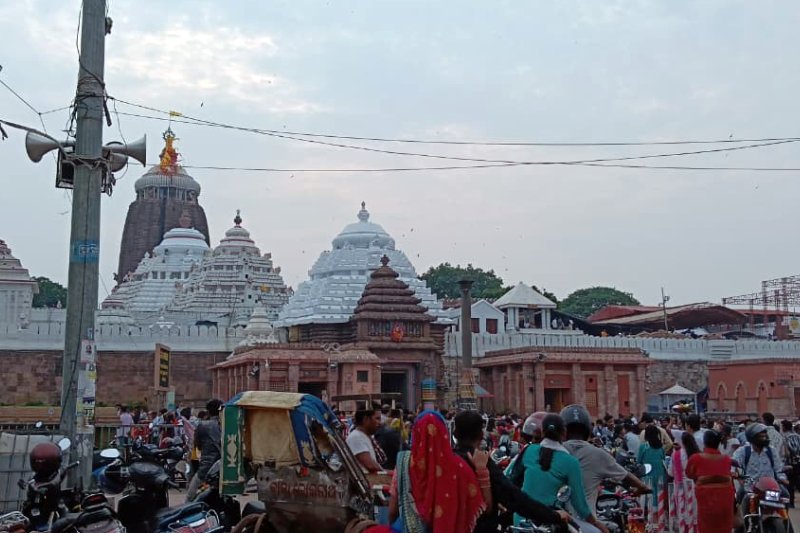
The Vimana, also called the Rekha Deula, is the soaring curvilinear tower above the main sanctum. It houses the Ratnavedi, or jewel throne, where the principal deities are worshipped. The main spire rises approximately 65.47 metres.
Jagamohana
The Jagamohana, or assembly hall, is a pyramidal-roofed structure with tiered architectural elements. It forms an important part of the temple's principal architectural sequence.
Nata Mandira
The Nata Mandira is a pillared hall associated with ritual and traditional performance activities. It was added during later phases of the temple's development.
Bhoga Mandapa
The Bhoga Mandapa is the hall associated with offerings of food. It forms part of the principal sequence of structures leading towards the sanctum.
Aruna Stambha
The Aruna Stambha is a 16-sided chlorite stone pillar standing outside the eastern Singhadwara. The pillar is approximately 33 feet high and is crowned by a representation of Aruna, the charioteer of the Sun God. It was relocated from the Konark Sun Temple in the 18th century.
Nila Chakra
The Nila Chakra is an approximately 11-foot-tall alloy wheel positioned on top of the main spire. The sacred flag, known as Patitapavana Bana, is changed daily.
Four Directional Gates
The temple complex has four principal gates:
-
Singhadwara: East or Lion Gate
-
Vyaghradwara: West or Tiger Gate
-
Hastidwara: North or Elephant Gate
-
Ashwadwara: South or Horse Gate
Mahaprasad and Ananda Bazar
The temple's traditional kitchen is renowned for preparing Mahaprasad. Food offerings are cooked in earthen pots over wood fires, with numerous varieties prepared as part of the temple's daily food traditions. Mahaprasad is available to devotees at Ananda Bazar.
Popular Activities & Things to Do
Visitors can participate in darshan according to the temple's daily ritual schedule and observe the temple's distinctive architectural elements from permitted areas.
Important visitor experiences include:
-
Taking darshan of Lord Jagannath, Lord Balabhadra and Devi Subhadra.
-
Observing the temple's Kalinga architectural features.
-
Visiting Ananda Bazar for Mahaprasad.
-
Viewing the Aruna Stambha and Singhadwara.
-
Experiencing the atmosphere of Bada Danda.
-
Visiting during major festivals such as Ratha Yatra and Snana Yatra.
-
Exploring nearby religious and tourist attractions in Puri.
How to Reach
By Road
Shree Jagannath Temple is located on Bada Danda in central Puri. Puri is connected with Bhubaneswar by road through NH-316. OSRTC buses, private coaches, taxis and auto-rickshaws provide road connectivity to Puri and the temple area.
Biju Patnaik International Airport in Bhubaneswar is approximately 60 km from Puri.
By Train
Puri Railway Station is the nearest railway station and is approximately 2.5 km from the temple. It is a terminal railway station with connections to major cities.
Auto-rickshaws, taxis and other local transport services can be used to travel from the railway station to the temple area.
By Air
The nearest major airport is Biju Patnaik International Airport in Bhubaneswar, approximately 60 km from Puri. Road transport from the airport to Puri is available through taxis and bus services.
Distance Chart
- Bhubaneswar Airport: Approximately 60 km
- Bhubaneswar Railway Station: Approximately 58 km
- Konark Sun Temple: Approximately 35 km
- Cuttack: Approximately 80 km
- Chilika Lake, Satapada: Approximately 50 km
- Puri Railway Station: Approximately 2.5 km
- Puri Central Bus Stand: Approximately 3 km
- Puri Beach: Approximately 2 km
- Gundicha Temple: Approximately 3 km
- Lokanath Temple: Approximately 3 km
- Narendra Tank: Approximately 1 km
Best Time to Visit
October to March is considered the most comfortable period for visiting Puri because the weather is generally mild and pleasant. Daytime temperatures during this period are stated to range from approximately 16°C to 28°C.
Early morning, particularly between approximately 5:30 AM and 8:00 AM, is suitable for visitors who want to avoid stronger daytime heat and potentially longer queues.
April to June is generally hot and humid, with summer temperatures reaching approximately 32°C to 40°C. Visitors travelling during this period should plan for heat and humidity.
The monsoon season from July to September brings heavy coastal rainfall, so rain protection is advisable.
Visitor Timings & Entry Information
The temple generally operates from approximately 5:00 AM to 11:00 PM, although access and darshan arrangements vary according to the day's ritual schedule.
Standard darshan does not require an entry ticket.
Entry into the temple compound is restricted to Hindus by established temple traditions. Non-Hindu and foreign visitors cannot enter through the temple gates.
Visitors who cannot enter the temple can obtain an elevated exterior view from the roof of the Raghunandan Library across the Grand Road.
Mobile phones, cameras, smartwatches and other electronic gadgets are prohibited inside the temple complex. Leather articles, outside food and drinks, alcohol and tobacco products are also prohibited.
A modest traditional dress code applies. Traditional clothing such as dhoti or kurta for men and saree or salwar-kameez for women is appropriate. Shorts, ripped jeans, sleeveless tops and short skirts are not permitted.
Nearby Essential Facilities
Drinking Water
Clean drinking water facilities are available along the outer perimeter walkway.
Food
Mahaprasad can be purchased and consumed at Ananda Bazar. Vegetarian Odia food is also available at restaurants around Bada Danda.
Medicines
Food and general visitor services are available around the surrounding Puri market and temple area.
Toilets
Public restroom facilities are available along the outer perimeter area.
Footwear and Leather Items
Official shoe-keeping and leather-item counters are available.
Mobile Phones and Baggage
Mobile phone and baggage locker facilities are available through arrangements associated with the Shree Jagannath Heritage Corridor area.
Travel Tips & Visitor Advice
- Carry a government-issued photo ID.
- Carry minimal cash for offerings and permitted services.
- Do not carry mobile phones, cameras or smartwatches into the temple complex.
- Avoid carrying leather belts, leather wallets, leather bags or other prohibited leather items.
- Large luggage should be left at the accommodation or an appropriate locker facility.
- Deposit footwear at the designated counter before entering.
- Wear modest traditional clothing.
- Carry drinking water for the journey, while following the temple's restrictions on what may be taken inside.
- Early morning visits can be more comfortable during warmer months.
- Allow approximately 2 to 3 hours for entry, queueing and darshan.
- Senior citizens should check the available queue arrangements before visiting.
- Visitors using wheelchairs can use the relatively flat heritage corridor around the outer wall, while access to inner areas involving the Baisi Pahacha presents mobility challenges.
Shree Jagannath Temple in Puri is one of Odisha's most important religious and cultural landmarks and one of Hinduism's Char Dham pilgrimage destinations. Its 12th-century architecture, sacred traditions, Mahaprasad, major festivals and distinctive visitor regulations make it an important destination for pilgrims and travellers visiting Puri. Visitors should plan their visit around the temple's daily rituals, entry rules, dress requirements and restrictions on electronic and leather items.
FREQUENTLY ASKED QUESTIONS
What is Shree Jagannath Temple famous for?
Shree Jagannath Temple is famous as one of Hinduism's four Char Dham pilgrimage destinations and as the principal shrine of the Jagannath tradition. It is also known for its distinctive Kalinga architecture, Mahaprasad and Ratha Yatra.
Where is Shree Jagannath Temple located?
Shree Jagannath Temple is located on Bada Danda, the Grand Road, in Puri, Odisha.
What is the entry fee for Shree Jagannath Temple?
Standard darshan is free and does not require an entry ticket.
Can non-Hindu visitors enter Shree Jagannath Temple?
Non-Hindu visitors cannot enter the temple compound through the temple gates. An elevated exterior view is available from the roof of the Raghunandan Library across the Grand Road.
Can mobile phones be taken inside Shree Jagannath Temple?
No. Mobile phones, cameras, smartwatches and other electronic gadgets are prohibited inside the temple complex.
What should visitors wear to Jagannath Temple Puri?
Visitors should wear modest traditional clothing. Dhoti or kurta is suitable for men, while saree or salwar-kameez is suitable for women. Shorts, ripped jeans, sleeveless tops and short skirts are not permitted.
Which railway station is nearest to Jagannath Temple Puri?
Puri Railway Station is the nearest railway station, approximately 2.5 km from the temple.
What is the best time to visit Jagannath Temple Puri?
October to March generally offers more comfortable weather. Early morning is suitable for visitors seeking cooler conditions and potentially shorter waiting times.