


Deogarh district was newly created on 01.01.1994, being bifurcated from Sambalpur District. It forms part of the old Bamara State (Deogarh Sub-Division). It is situated in the western region of the state having its Head Quarter at Deogarh. This District is entirely of hilly tract. The Hill system of Deogarh has been categorized mainly under four rangesHistory Bamanda–the citadel of creative artists dates back to 5th century A.D. when Mathara Royal Family was at the helm of the Administration.

After this dynasty, Ganga Rulers came into power and established their capital at Deogarh. Deogarh attained all-round prosperity during the reign of Raja Basudev Sudhal Dev, the most enlightened rulers of this clan. A new horizon was innovated in the field of communication by the foundation of Jagannath Ballav press in 1886 and publication of a weekly magazine the “Sambalpur Hitaishini” in 1889. It was during his rule that the jail, police station, post offices, Dispensaries were established and irrigation system was introduced.
GEOGRAPHICAL LOCATION
District of Deogarh is situated in the Western region of the state havingits Head Quarter at Deogarh. Deogarh is located between 21o 31′ 53″N Latitude and 84o 43′ 2″ E Longitude.How to reach there? The nearest Airports for visiting places of interest in Deogarh Districtare at Bhubaneswar (280 KMs.) and Raipur (376 KMs.).The nearest railheads for Deogarh are at Sambalpur (90 KMs.), Bamra on theNagpur-Hawrah Section of South Eastern Railway (103 KM),
Jharsuguda (98 KMs.) and Rourkela (115 Kms.)Deogarh Town is 90K.Ms. to the east of Sambalpur town on N.H.-6. National HighwayNo.6 passes through the district acts as the main artery ofinter-regional trade and other links. It is 115 KMs. from Rourkela & 280KMs. from Bhubaneswar. Taxis, auto-rickshaws, cycle-rickshaws andlocal bus services are available. Autos are also a main source oftransport.Where to stay? Though Deogarh is a small district in comparison with other districts,
but the status of the district basically belongs to the families of the Rajas & Maharajas. These persons belong to Royal families of Orissa.So, the accommodations available at here are also of royal quality.Though the number of star hotels can’t be found, but numbers of good hotels are available in the district. List of hotels are available at http://www.orissa360.com to choose from.
What is Deogarh District of Odisha famous for?
Deogarh District of Odisha is famous for its rich royal heritage as the ancient capital of the Bamanda kingdom and its stunning hilly landscapes in western Odisha. It’s celebrated for its scenic Pradhanpat Waterfall, the revered Pradhanpat Temple, and a legacy of art and culture nurtured by its former rulers. This tranquil district, formed on January 1, 1994, is a gateway to nature and history, located about 90 km from Sambalpur.
Historical Legacy:
The historic heart of the Bamanda princely state, known for enlightened rulers like Raja Basudev Sudhal Dev.
Natural Beauty:
A hilly district renowned for its picturesque waterfalls, dense forests, and scenic views across four main hill ranges.
Key Attractions:
The captivating Pradhanpat Waterfall, the sacred Pradhanpat Temple, and the archaeological remains of its royal past.
Cultural Hub:
Known for traditional festivals like Shivaratri Mela and a history of pioneering media with the “Sambalpur Hitaishini” magazine in 1889.
Historical & Geographical Profile:
Deogarh’s identity is deeply rooted in its history as the capital of the Bamanda (Deogarh) princely state, a center of administration and culture since the 5th century under the Mathara and later Ganga dynasties. The district’s entirely hilly terrain, categorized into four distinct ranges, creates a cool, picturesque landscape that sets it apart from the plains of coastal Odisha. This geography fostered a unique kingdom that flourished under progressive rulers who introduced modern systems like press, irrigation, and dispensaries in the 19th century.
Cultural Heritage & Connectivity:
More than just a scenic spot, Deogarh is a repository of living traditions. The district comes alive during its major melas (fairs) like the Shivaratri and Bhadra Purnima, which blend devotion with vibrant local commerce. Its royal families have long been patrons of the arts, a legacy that visitors can sense in the local culture. While tranquil, Deogarh is well-connected via National Highway 6, with convenient road access from major hubs like Sambalpur (90 km) and Rourkela (115 km), making it a perfect serene getaway.
Places of Attraction :-
Pradhanpat Waterfall and Temple:
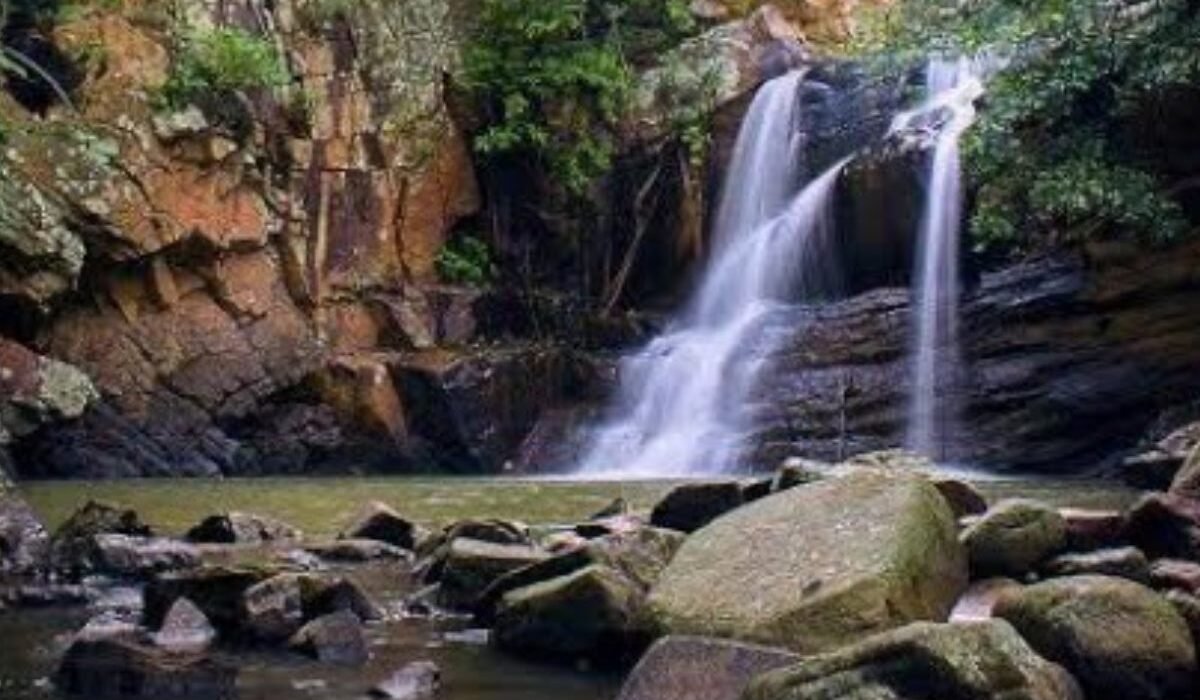
This is the crown jewel of Deogarh’s natural attractions. The waterfall cascades beautifully amidst lush greenery, creating a serene and refreshing atmosphere. Adjacent to it lies the ancient Pradhanpat Temple, a significant spiritual site dedicated to Lord Shiva that attracts pilgrims, especially during the grand Shivaratri Mela, making it a perfect blend of natural beauty and religious sanctity.
Deogarh Palace and Royal Estate:
The town is dotted with remnants of its regal past. While the main palace reflects classic Odishan architecture, the wider estate includes old administrative buildings, gardens, and temples built by the Bamanda rulers. These structures offer a quiet, walkable history lesson into the life and governance of one of Odisha’s enlightened princely states.
Bamanda Fort Ruins and Historical Sites:
For history enthusiasts, exploring the older fortifications and archaeological sites around Deogarh is rewarding. The area, once the citadel of the Mathara and Ganga dynasties, holds ruins and remnants that speak of its strategic importance centuries ago, set against the backdrop of its signature hilly terrain.
Scenic Hill Viewpoints and Nature Trails:
Given its classification into four hill ranges, the district offers numerous unnamed but breathtaking viewpoints along its roads and trails. A drive or hike in the region rewards visitors with panoramic vistas of rolling hills, dense forests, and the unique ecosystem of Western Odisha’s highlands, ideal for photography and peaceful contemplation.
Fairs and festivals
There are three important fairs, namely, Shri Panchmi mela held in January, Shivaratri mela held in March and the Bhadra Purnima mela held in September. Deogarh celebrate many festivals including Makar Mela, Laxmi Puja, Durga Puja among many others.Shopping An ancient centre of diamond trade, Sambalpur is famous for its tie and dye textiles. Though you can buy some antiques and souvenirs from here, the best buy would be the Chanderi saris, for which it is famous world wide.


